
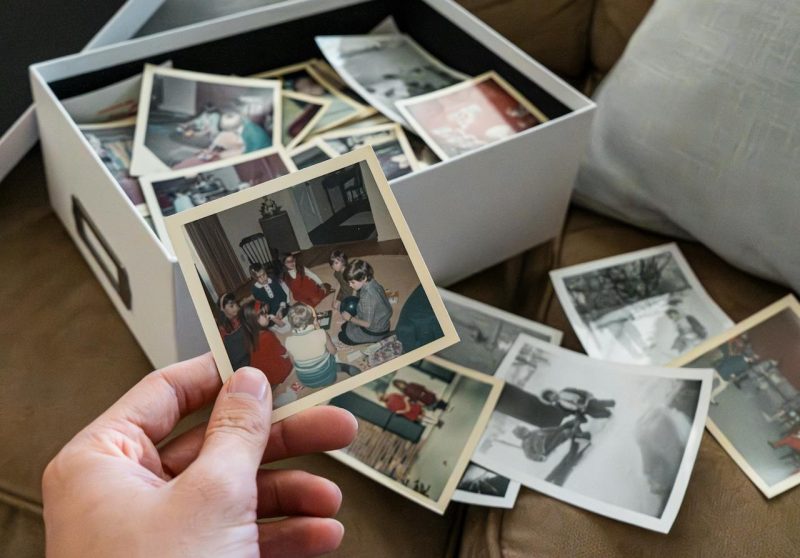
In my recent article, I invited you to begin your family archive not with a plan or a system—but by simply following what catches your eye.
If you tried that, you may have noticed something.
It felt… different.
Maybe a little quieter.
Maybe a little slower.
Maybe even a little uncomfortable at first.
And yet, there’s something there.
So let’s go a little deeper.
Why This Approach Works
We’re often taught to approach our photos and family history like a project to manage. Sort the piles. Label the names. Put things in order. Be efficient.
And while there’s nothing wrong with that approach, it tends to skip over something important:
Connection.
When you follow what catches your eye, you’re not just choosing a photo—you’re responding to something.
A detail.
A feeling.
A memory.
A question.
That moment of pause? That’s not random. It’s an invitation.
And when you allow yourself to follow it, you begin to experience your archive rather than just organize it.
A Simple Reflection Practice
If you’re willing, try this with just one photo or a small group of images.
You don’t need much time. You don’t need a perfect setup. Just a few quiet minutes.
Sit with the image and gently ask yourself:
- What do I notice?
Look beyond the obvious. Notice small details—hands, posture, background, expressions. - What do I feel?
There’s no right answer here. Curiosity, warmth, sadness, confusion—it all counts. - What do I remember… or wish I knew?
This is where stories begin. Even if you don’t have answers, your questions matter.
You might want to jot down a few notes, or simply sit with what comes up, and that’s enough.
When a Photo Becomes More Than a Photo
Sometimes nothing much happens—and that’s okay.
But sometimes, something shifts.
A memory surfaces that you hadn’t thought about in years.
A question forms that makes you want to call a relative.
A small detail connects to something you’ve seen elsewhere.
Or you simply feel something—something you can’t quite explain.
That’s the moment where a photograph becomes more than an image.
It becomes a doorway.
Let It Lead You (Gently)
One of the most surprising things about working this way is what happens next.
You don’t have to push forward. The next step often reveals itself.
You might:
- Reach for another photo from the same group
- Write down a memory or a story
- Look up a name or place
- Or simply sit a little longer and reflect
There’s no pressure to “keep going.” There’s only an invitation to follow.
A Word About Emotion
If you’ve spent any time with old photographs, you’ve probably experienced moments of emotion—sometimes when you least expect it.
That’s not something to push past; that’s something to honor.
Photographs carry more than visual information. They hold pieces of experience, relationship, and memory. When we slow down enough to notice, those layers begin to surface.
You don’t have to analyze them.
You don’t have to explain them.
Just noticing is enough.
This Is Still Progress
If you’re someone who likes to feel productive, this approach might feel a little… unstructured.
But let me reassure you: This is progress.
Every time you:
- Notice something new
- Write down a memory
- Ask a question
- Feel a connection
You are deepening your archive and adding meaning—not just information.
That meaning is what will matter most to the people who come after you.
From One Moment to Momentum
You may have started with one photo, but over time, those small moments begin to connect, one leading to another. That one memory leads to a story, and the story leads to a deeper understanding.
Not because you forced it, but because you followed what mattered.
Walking Forward
Your family archive doesn’t need to be finished to be valuable.
It needs to be engaged with – Visited – Felt.
Understood—little by little, over time.
So if you’ve been waiting for the “right time” or the “right system” to begin…
Let this be your permission!
- Go back to that one photo.
- Follow what catches your eye.
And see where it leads you.