
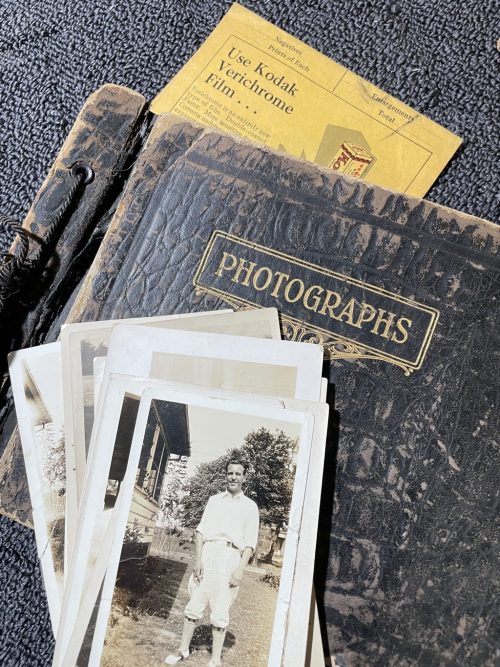
Published in the Lackawanna Historical Society newsletter
Have you ever held an old photograph and felt transported to another time? Perhaps it was a sepia-toned portrait of a great-grandparent whose life you’ve only heard about in stories. Or maybe it was an image of a bustling town square that looks familiar but is long gone. Photographs are not just keepsakes; they are our powerful connectors to history, offering glimpses into the lives, struggles, and celebrations of those who came before us. As the Photo Archaeologist, I’m excited to explore in this article how uncovering, curating, and preserving family and community photographs as archives allow us to better understand our past, fit into the narrative of history, and be a legacy to share now and for future generations.
Photos as Powerful Connectors to History
As a long-time photographer, I’ve often thought of photographs as time machines. Photographs freeze moments and can allow us to travel back, not just to observe but to connect with the past (I mean, what history lover wouldn’t want to go back in time to experience some point in history?). They reveal details of the era, lifestyle, places, interests, and more, all of which help paint a vivid picture of a single moment in time—recent or long ago.
Beyond the aesthetics, photos reveal stories of challenges and celebrations. A group portrait might show immigrant ancestors who braved a new land, while a wedding photo captures the joy and optimism of a young couple as they start their life together. These images don’t just tell us about individual lives; they reflect their time’s cultural and historical context, helping us see the bigger picture of how lives were lived, worked, and loved.
As you look at your own photographs, even those on your device or computer, what clues will they speak of to your descendants?
The Stories Hidden in Photographs
Every photo has a story to tell (remember the “1000 words” quote?), but often, those stories, those 1000 words, need to be uncovered or elicited from the image. As a long-time portrait and event photographer, visual storytelling has always been important, and now I understand why, even more so as I build my family archive and help others understand the importance of doing the same.
Stories begin with curiosity, with asking questions. Who are the people in the image? What roles did they play in their families or communities? What does the setting tell us about their lives, the community, and the time period? These are questions that simply get you started.
Family photographs often reveal how individuals contributed to historical events. For example, a photo of a great-uncle in a military uniform during World War II connects to the broader story of the war and its impact on families and communities. A snapshot of children playing outside a factory might hint at a family’s ties to local industry, such as our region’s multifaceted heritage in coal mining, railroads, and lace-making, and the many businesses that supported every aspect of our community.
Understanding these stories allows us to see our ancestors not just as names and dates on a family tree but as real people who shaped and were shaped by history. It also helps us understand family dynamics, values, and traditions that may still influence us today.
Why Uncover and Curate Family Stories
Uncovering and curating family stories from photographs can fill historical gaps and ensure these stories aren’t forgotten. As historians and genealogists know, photographs are invaluable primary sources that provide context and detail that written records lack. But beyond research value, these stories connect us to our heritage and community, offering us a sense of belonging and connection. Past and present photographs also provide a way to see ourselves as part of the ongoing story around us, with (or even without) roots that stretch back through generations.
Curating these stories ensures they are not lost to time. Without context, photographs become meaningless images in a box. Identifying the people, places, and events depicted—and writing those details down—turns a simple photo collection into a rich archive. Digitizing and organizing these collections makes them accessible for future generations to explore and cherish.
The Importance of Family Archives
Creating a personal or family archive is about more than preserving photos; it’s about maintaining and building a legacy. A well-curated archive serves as a time capsule, offering future generations a window into their ancestors’ lives, values, and stories – and how WE lived. These archives also contribute to our community’s shared history. For example, a photo of a family picnic might reveal a moment of the development of a local park, or a picture of a family on their front porch shows how that home and even the neighborhood have changed over time.
Preserving photos requires intention. Over time, images can fade, deteriorate, or be lost entirely. Taking steps to scan fragile photographs, videos, and movies, even audio tapes, with as much detail as possible, and storing them in a proper, secure location and on a secure digital platform ensures the survival of time and allows the sharing of both the images and their stories.
Beyond Immediate Families: The Broader Value of Archives
Family archives are not just for immediate relatives; they have value beyond individual families. I often hear, “Why bother? The kids don’t care.” Trust me, they may not care until they do. At the very least, taking on building a family legacy is for our own peace of mind. Family archives also contribute to the larger historical narrative of community, region, and beyond. Photographs from personal collections often reveal details about local events, cultural practices, and economic changes that shaped regions like Lackawanna County.
By creating and sharing archives, we ensure that future historians and genealogists can continue piecing together the puzzle of the past. We also leave a meaningful legacy for descendants, who will see their heritage not as a distant concept but as a living, breathing story.
How to Start Your Archive Journey
The idea of uncovering, curating, and preserving a family archive may feel overwhelming (ok, even paralyzing, ask me how I know), but it starts with small, simple steps and doesn’t have to be complicated to get started. You can even begin with the photographs on your device. Here are a few simple steps:
- Gather and Sort: Gather photos from various sources—attics, albums, and even relatives’ collections. Sort them into categories by family branch, event, or time period. Your collection can be sorted however you like. There is no right or wrong way.
- Ask Questions: Share photos with older family members to identify people and places, and record their stories before they’re lost. You can record those conversations with your phone’s voice recorder or take detailed notes – but having someone’s voice preserved is a fantastic addition.
- Preserve and Digitize: Scan fragile photos and store originals in acid-free sleeves. Use a secure, private, archival digital platform to create an organized, accessible archive. If your images are fragile, please ask for help to ensure the item’s safety.
- Share the Stories: Don’t let your archive sit unseen and unused. Share it with family, contribute to local historical societies, or create a photo book documenting your discoveries.
A Community Call to Action
The photos in your collection are more than personal treasures; they are pieces of history waiting to be uncovered. The Lackawanna Historical Society posts historic photos on its Facebook page daily, inviting you and the community to engage with our local history. Why not do the same with your family photos? By sharing, you just might uncover more stories, add depth to your archive, and preserve your family’s story for the future. Your family history and your community history are alive in every photograph from then and now – how can your archive ensure that the past continues to inspire and inform?
What stories are waiting to be told from your photographs?
Need some guidance on building your family archive? Contact me at Cheryl@CherylKaiser.com